
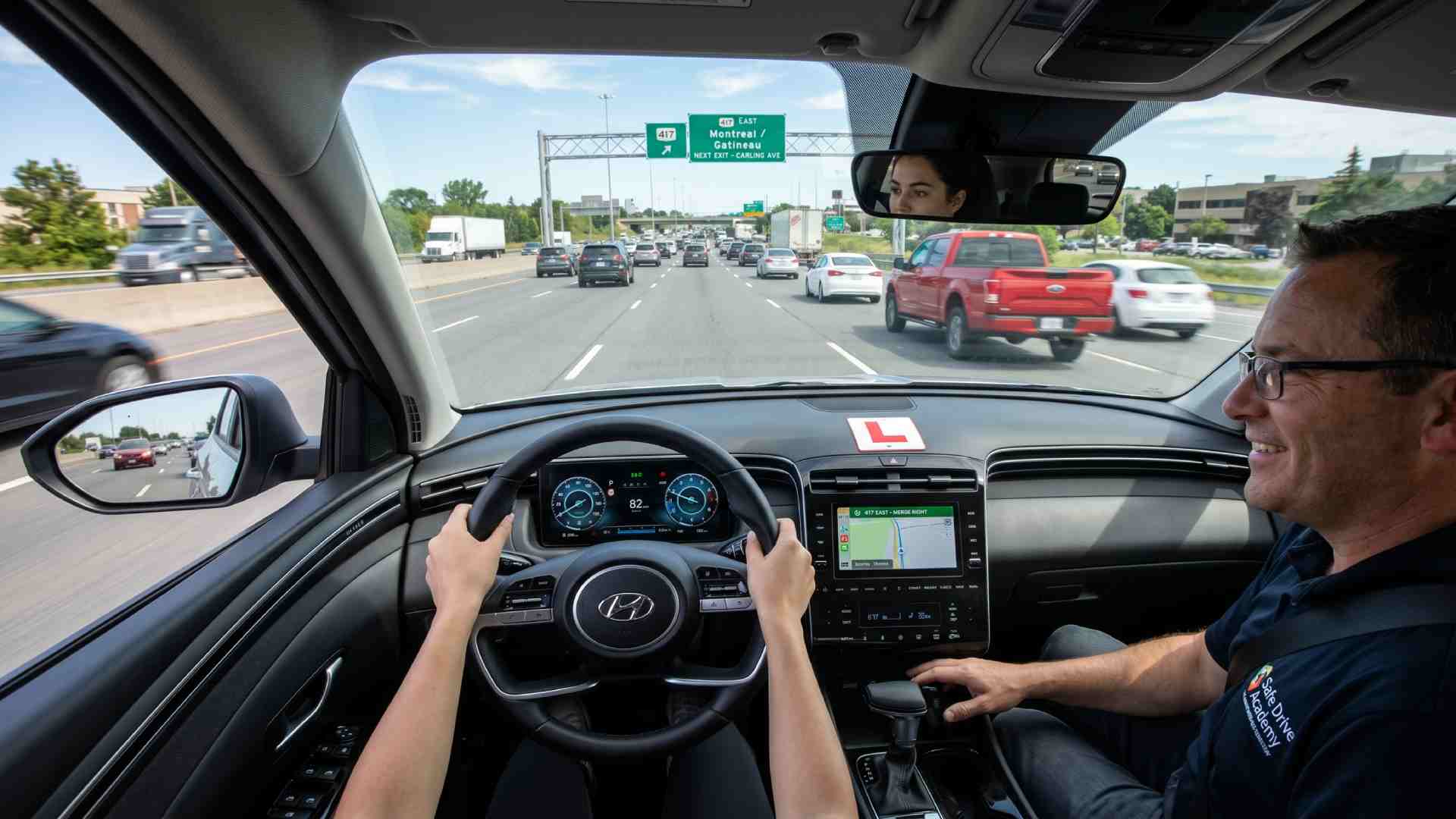
Highway Driving Lessons in Ottawa: 5 Rules for Merging on the 417 in 2026
Merging safely on Highway 417 requires matching traffic speed and utilizing the full acceleration lane before sliding into a gap. Highway Driving Lessons in Ottawa help you master these skills by providing supervised practice in real-world traffic, building the confidence needed to handle high-speed lane changes and busy Ottawa interchanges safely.
The Importance of Mastering Ottawa’s Highways
Navigating the Queensway or the 416 can be a daunting experience. Highway Driving Lessons in Ottawa are designed to bridge the gap between suburban street driving and high-speed expressway navigation. These lessons focus on high-level perception and quick decision-making. By enrolling in professional Ottawa highway driving training, you transition from a hesitant learner to a confident operator who understands the unique rhythm of the capital region’s roads.
Understanding the Queensway
The Ontario Highway 417, commonly known as the Queensway, is the backbone of Ottawa’s transportation network and presents unique challenges.
High-Speed Entry Points
Ottawa’s highway system features diverse entry ramps. Highway driving for beginners involves learning how to evaluate these ramps quickly and adjusting your acceleration to match specific interchange geometry.
The Psychology of Fast Traffic
The primary hurdle for many novices is the speed of highway traffic. On the 417, traffic often moves at 100km/h or more. Professional training ensures you learn to accelerate decisively, matching the flow of traffic before making your move.
5 Crucial Rules for Merging on Highway 417
Step 1: Speed Matching
Reach the same speed as vehicles on the highway before reaching the end of the ramp. This minimizes disruption to traffic flow and makes it easier for other drivers to accommodate you. Advanced driving lessons Ottawa instructors emphasize that merging too slow is a major risk.
Step 2: Lane Utilization
Use the entire length of the acceleration lane if necessary. Never stop or slow down significantly in this lane unless traffic is at a complete standstill. Advanced driving lessons Ottawa help you find the “sweet spot” where you have maximum visibility.
Step 3: Visual Awareness
Mirrors alone are never enough. A quick, decisive shoulder check is mandatory to ensure there is no vehicle in your rear-quarter view. This is especially critical on the 417 where motorcycles and small cars can be easily overlooked.
Step 4: Communication
Activate your signal as soon as you enter the acceleration lane to tell other drivers where you intend to go. Merging onto highway tips Ottawa specialists provide always highlight early communication as a key safety factor.
Step 5: Gap Management
Once merged, do not crowd the car in front. Safe speed and distance on highways dictate at least a three-second gap to allow for emergency maneuvers and reduce high-speed stress.
Merging Mastery Reference Table
| Rule | What to Do | Common Mistake | Pro Tip |
|---|---|---|---|
| Speed Match | Accelerate to 100 km/h | Merging at 70 km/h | Check traffic speed while on ramp curves |
| Lane Usage | Use full merge lane | Cutting over early | Stay in lane until matching highway speed |
| Observations | 360-degree awareness | Only using mirrors | Check the “blind zone” with a head turn |
| Signaling | Signal for 3–5 seconds | Signaling as you turn | Keep signal on until fully in the lane |
| Distance | Keep 3+ seconds space | Tailgating to force entry | If gap is slow, find the next one |
Advanced Safety Maneuvers
Lane Changing Precision
Proper lane changing rules on highways require ensuring the gap you are moving into is growing or stable. Professional Ottawa highway driving training teaches you how to keep your hands steady while your eyes move, preventing “drifting” during shoulder checks.
Maintaining Space Buffers
In heavy traffic, maintaining a safe speed and distance on highways is essential. You must learn to anticipate the “accordion effect” where traffic slows abruptly and avoid blind spots of large vehicles.
Common Mistakes to Avoid
According to Transport Canada, improper lane changes and merging contribute to nearly 20% of high-speed road incidents in Canada. Frequent errors include heshesitating during merging, driving too slow for conditions, or “camping” in the left lane, which disrupts flow. Professional Highway Driving Lessons in Ottawa address these habits early.
The Vital Role of Professional Driving Lessons
Training benefits include having a dual-brake vehicle for emergencies and an instructor who remains calm. Practice under supervision allows you to tackle difficult ramps in Ottawa with a safety net. For those looking to excel, combining these sessions with Road Test Preparation Ottawa ensures you are ready for your G test. You can also consult the Official MTO Drivers Handbook for latest regulations.
Frequently Asked Questions About Highway Driving Lessons in Ottawa
Is highway driving included in Highway Driving Lessons in Ottawa?
Yes, highway training is a core component. Instructors focus on high-speed entry, exit, and lane-management specifically tailored for the Ottawa queensway.
How do I merge safely?
Match highway traffic speed. Signal early, check blind spots, and move into a safe gap decisively.
What speed should I maintain while merging?
Aim to match the speed of traffic in the right lane, typically 100km/h on the 417.
Are highway driving lessons necessary for beginners?
Highly recommended. Professional guidance helps build correct habits and eliminate fear.
How can I overcome my fear of highway driving?
Exposure and education. Practicing with an instructor replaces anxiety with competence.
Final Thoughts
Mastering highway driving is a significant milestone. By following these rules and focusing on safe speed and distance on highways, you protect yourself and others. Confidence comes from competence and practice. The skills learned in Highway Driving Lessons in Ottawa will serve you for a lifetime of safe driving.
